
Notice: We do not service domestic animals (cats/dogs), coyotes, cougars, or bobcats.

Notice: We do not service domestic animals (cats/dogs), coyotes, cougars, or bobcats.

Google Reviews
(360) 667-1272elijah.wilson@safenestwildlife.com
HomeAbout UsWildlife LibraryBlogFAQsContact
Call: (360) 667-1272
(360) 667-1272
Wildlife Trapping and RemovalExclusion RepairsWildlife Cleanup and SanitationInsulation ServicesVapor BarrierRat Removal ServicesBat Removal & ExclusionRodent Proofing ServicesCrawl Space Restoration
View all services
HomeAbout Us
Services
Wildlife Trapping and RemovalExclusion RepairsWildlife Cleanup and SanitationInsulation ServicesVapor BarrierView all services
Wildlife LibraryBlogFAQsContact
Call: (360) 667-1272

Request an inspection

Loading the booking form…

Loading

SafeNest Wildlife is your local partner for professional, humane wildlife removal and long-term exclusion repairs. We keep the wild where it belongs, sealing your home for good.

  • (360) 667-1272
  • elijah.wilson@safenestwildlife.com
  • 16812 SE 1st Street, Unit 40, Vancouver, WA 98684
    (opens in a new tab)

Our Services

  • Wildlife Trapping and Removal
  • Exclusion Repairs
  • Wildlife Cleanup and Sanitation
  • Insulation Services
  • Vapor Barrier
  • Rat Removal Services
  • Bat Removal & Exclusion
  • Rodent Proofing Services
  • Crawl Space Restoration

Company

  • Home
  • About Us
  • Services
  • Wildlife Library
  • Blog
  • FAQs
  • Contact

Business Hours

Mon – Fri
8:00am – 5:00pm
Sat – Sun
Closed

Service Areas

  • Vancouver
  • Camas
  • Ridgefield
  • Battle Ground
  • Portland
All Areas

© 2026 SafeNest Wildlife. All rights reserved.WA CL# SAFENL*748BZOR CCB# 262372

  • Privacy Policy
  • Terms of Service
  1. Home
  2. Wildlife Library
  3. Squirrels

Squirrels

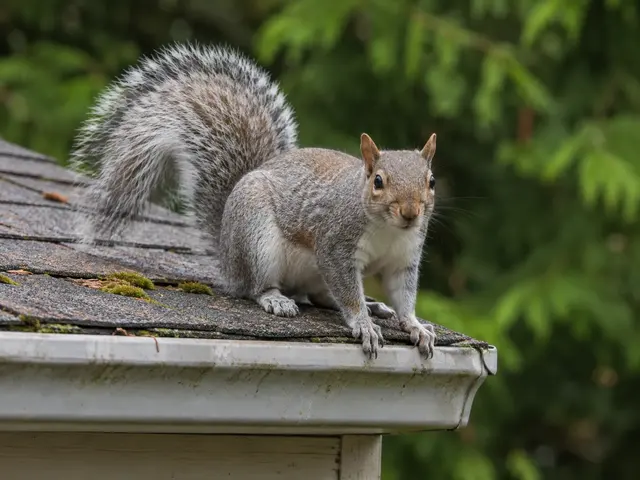
Eastern gray squirrel crouched on the edge of a shingled roof above the gutter

Species identification

Squirrels profile

Identification & behavior

The PNW is home to several species, including the Eastern Gray and Fox Squirrel. These rodents are diurnal (active during the day) and are motivated by a biological need to gnaw. They are agile acrobats that can leap 10 feet horizontally and drop 20 feet vertically without injury.
Common Signs

  • Rapid scurrying or "rolling" noises in the attic, primarily at dawn and dusk.
  • Precision entry points: 1.5 to 2-inch holes chewed into fascia boards or trim.
  • Hoarded piles of nuts, pinecones, or nesting debris in attic corners.
  • Visible chewing on lead roof jacks or aluminum vents.

Structural & Health Risks

  • Electrical Fires: Wire chewing is a leading cause of unknown attic fires.
  • Insulation Loss: They compress and soil insulation, reducing thermal efficiency.
  • Secondary Intrusions: Their entry holes are often widened by larger predators.

Why Your Home?

  • Shelter: Squirrels build "dreys" in trees, but attics provide a predator-proof upgrade.
  • Tooth Maintenance: Gnawing on structural materials keeps teeth managed.

Did You Know?

  • A squirrel’s front teeth grow about 6 inches per year.
  • They can smell a nut buried under a foot of snow.
  • They use their tails as parachutes and communication flags.

Schedule an Inspection for Squirrels

SafeNest Wildlife van
Call: (360) 667-1272