
Notice: We do not service domestic animals (cats/dogs), coyotes, cougars, or bobcats.

Notice: We do not service domestic animals (cats/dogs), coyotes, cougars, or bobcats.

Google Reviews
(360) 667-1272elijah.wilson@safenestwildlife.com
HomeAbout UsWildlife LibraryBlogFAQsContact
Call: (360) 667-1272
(360) 667-1272
Wildlife Trapping and RemovalExclusion RepairsWildlife Cleanup and SanitationInsulation ServicesVapor BarrierRat Removal ServicesBat Removal & ExclusionRodent Proofing ServicesCrawl Space Restoration
View all services
HomeAbout Us
Services
Wildlife Trapping and RemovalExclusion RepairsWildlife Cleanup and SanitationInsulation ServicesVapor BarrierView all services
Wildlife LibraryBlogFAQsContact
Call: (360) 667-1272

Request an inspection

Loading the booking form…

Loading

SafeNest Wildlife is your local partner for professional, humane wildlife removal and long-term exclusion repairs. We keep the wild where it belongs, sealing your home for good.

  • (360) 667-1272
  • elijah.wilson@safenestwildlife.com
  • 16812 SE 1st Street, Unit 40, Vancouver, WA 98684
    (opens in a new tab)

Our Services

  • Wildlife Trapping and Removal
  • Exclusion Repairs
  • Wildlife Cleanup and Sanitation
  • Insulation Services
  • Vapor Barrier
  • Rat Removal Services
  • Bat Removal & Exclusion
  • Rodent Proofing Services
  • Crawl Space Restoration

Company

  • Home
  • About Us
  • Services
  • Wildlife Library
  • Blog
  • FAQs
  • Contact

Business Hours

Mon – Fri
8:00am – 5:00pm
Sat – Sun
Closed

Service Areas

  • Vancouver
  • Camas
  • Ridgefield
  • Battle Ground
  • Portland
All Areas

© 2026 SafeNest Wildlife. All rights reserved.WA CL# SAFENL*748BZOR CCB# 262372

  • Privacy Policy
  • Terms of Service
  1. Home
  2. Wildlife Library
  3. Nutria (River Rats)

Nutria (River Rats)

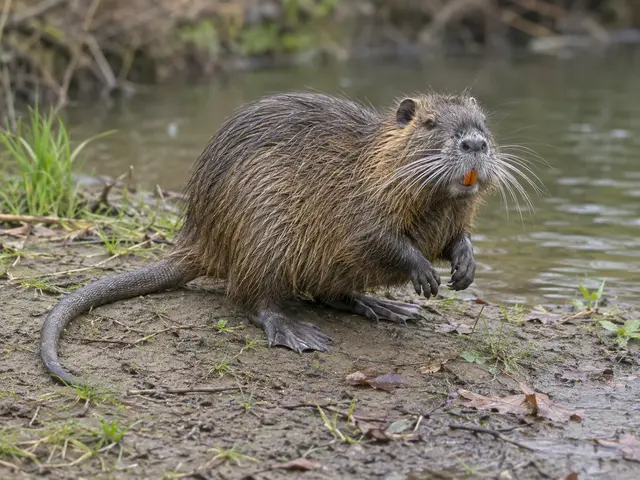
Nutria with orange front teeth on a muddy riverbank

Species identification

Nutria (River Rats) profile

Identification & behavior

Nutria are large, semi-aquatic rodents native to South America but highly invasive in the Pacific Northwest. They thrive in Portland and Vancouver's wetlands, rivers, and drainage ditches. Often mistaken for beavers, they can weigh up to 20 pounds and have distinctive orange teeth and round, rat-like tails.
Common Signs

  • Extensive burrowing along riverbanks, ponds, and drainage ditches.
  • Severe damage to wetland vegetation and agricultural crops.
  • Large, cylindrical droppings near water sources.
  • Sightings of large rodents swimming or foraging during daylight or twilight.

Structural & Health Risks

  • Bank Erosion: Their extensive burrowing severely undermines banks, leading to collapses and flooding.
  • Ecosystem Destruction: They overgraze wetland plants, destroying habitats for native fish and waterfowl.
  • Disease Vectors: They carry pathogens and parasites like leptospirosis and liver flukes that contaminate water.

Why Your Home?

  • Water Proximity: They require aquatic environments and build burrows directly into banks.
  • Food Abundance: The PNW offers lush wetland vegetation, roots, and crops that they consume voraciously.

Did You Know?

  • A single nutria can consume up to 25% of its body weight in plant material every day.
  • They were originally introduced to the PNW in the 1930s for the fur trade.
  • Unlike beavers, nutria do not build dams and have thin, rat-like tails instead of flat paddles.

Schedule an Inspection for Nutria (River Rats)

SafeNest Wildlife van
Call: (360) 667-1272