
Notice: We do not service domestic animals (cats/dogs), coyotes, cougars, or bobcats.

Notice: We do not service domestic animals (cats/dogs), coyotes, cougars, or bobcats.

Google Reviews
(360) 667-1272elijah.wilson@safenestwildlife.com
HomeAbout UsWildlife LibraryBlogFAQsContact
Call: (360) 667-1272
(360) 667-1272
Wildlife Trapping and RemovalExclusion RepairsWildlife Cleanup and SanitationInsulation ServicesVapor BarrierRat Removal ServicesBat Removal & ExclusionRodent Proofing ServicesCrawl Space Restoration
View all services
HomeAbout Us
Services
Wildlife Trapping and RemovalExclusion RepairsWildlife Cleanup and SanitationInsulation ServicesVapor BarrierView all services
Wildlife LibraryBlogFAQsContact
Call: (360) 667-1272

Request an inspection

Loading the booking form…

Loading

SafeNest Wildlife is your local partner for professional, humane wildlife removal and long-term exclusion repairs. We keep the wild where it belongs, sealing your home for good.

  • (360) 667-1272
  • elijah.wilson@safenestwildlife.com
  • 16812 SE 1st Street, Unit 40, Vancouver, WA 98684
    (opens in a new tab)

Our Services

  • Wildlife Trapping and Removal
  • Exclusion Repairs
  • Wildlife Cleanup and Sanitation
  • Insulation Services
  • Vapor Barrier
  • Rat Removal Services
  • Bat Removal & Exclusion
  • Rodent Proofing Services
  • Crawl Space Restoration

Company

  • Home
  • About Us
  • Services
  • Wildlife Library
  • Blog
  • FAQs
  • Contact

Business Hours

Mon – Fri
8:00am – 5:00pm
Sat – Sun
Closed

Service Areas

  • Vancouver
  • Camas
  • Ridgefield
  • Battle Ground
  • Portland
All Areas

© 2026 SafeNest Wildlife. All rights reserved.WA CL# SAFENL*748BZOR CCB# 262372

  • Privacy Policy
  • Terms of Service
  1. Home
  2. Wildlife Library
  3. Moles

Moles

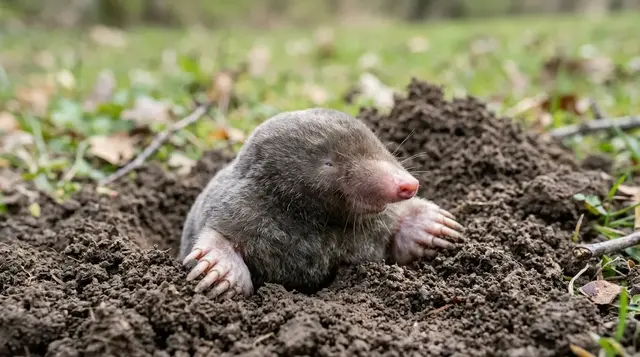
Mole digging its way out of a molehill in a lawn

Species identification

Moles profile

Identification & behavior

Moles are subterranean insectivores, not rodents. They live almost entirely underground in complex tunnel systems. In the lush, damp soil of the Pacific Northwest, they thrive and can rapidly destroy the aesthetics and root systems of manicured lawns and gardens.
Common Signs

  • Volcano-shaped mounds of dirt (mole hills) pushed up from deep tunnels.
  • Raised surface ridges crossing the lawn.
  • Spongy-feeling ground when walked upon.
  • Yellowing or dying grass over tunnel paths.

Structural & Health Risks

  • Landscape Destruction: Extensive tunneling destroys roots and disrupts landscaping.
  • Tripping Hazards: Sunken tunnels and mounds create uneven, unsafe terrain.
  • Secondary Pests: Abandoned mole tunnels are often taken over by voles or mice.

Why Your Home?

  • Food Supply: Yards rich in earthworms, grubs, and soil insects are prime real estate.
  • Soil Conditions: Soft, damp, well-irrigated soil is easier to excavate.

Did You Know?

  • Moles can dig surface tunnels at a rate of 18 feet per hour.
  • They consume up to 100% of their body weight in insects daily.
  • Their saliva contains a toxin that paralyzes earthworms.

Schedule an Inspection for Moles

SafeNest Wildlife van
Call: (360) 667-1272